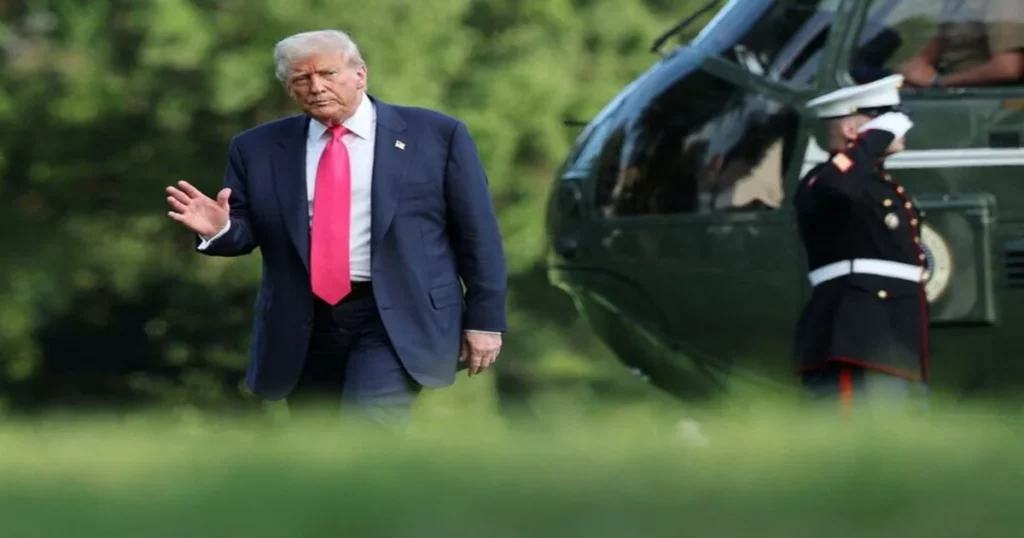
President Donald Trump announced that a trade deal with Vietnam is nearly finalized, though without revealing many specifics. Speaking to reporters at Joint Base Andrews, Trump confirmed the existence of the agreement but said releasing full details wasn’t necessary. The deal reportedly includes a reduction in planned U.S. tariffs on Vietnamese imports, from a threatened 46% down to 20%. However, questions remain about enforcement, especially regarding products the U.S. believes are illegally transshipped through Vietnam. As per trade tensions with China continue, this agreement could significantly reshape supply chains across Southeast Asia and deepen U.S.-Vietnam economic ties.
What are the details of the Trump Vietnam deal and why are they unclear?
President Trump claimed that the Vietnam trade agreement is “pretty well set,” suggesting it’s close to completion. While he previously indicated that tariffs would be lowered to 20%, many specifics have not been disclosed. For example, the U.S. has yet to clarify what constitutes “illegal transshipments” or how much local value Vietnam must add to avoid a 40% penalty tariff on certain goods.
Vietnam, for its part, has only acknowledged a joint framework, not specific tariff rates. This leaves major gaps in public understanding of the deal’s scope and execution, especially concerning which products are affected and how enforcement will be handled.
How could the Vietnam deal reshape U.S. trade strategy in Asia?
Sine the 2018 U.S.-China trade war began, Vietnam has emerged as a major beneficiary, nearly tripling its exports to the U.S. at the same time as its imports from China surged. This has led to suspicions that Chinese products are being rerouted through Vietnam to avoid tariffs, a practice the Trump administration is attempting to stop through this deal.
If finalized, the deal could reinforce Vietnam’s position in the global supply chain and tighten the U.S.’s economic influence in Southeast Asia. It also signals a growing reliance on bilateral deals over multilateral trade frameworks. With strategic competition with China intensifying, Trump’s approach to Vietnam may serve as a blueprint for future U.S. trade moves into the Indo-Pacific.


