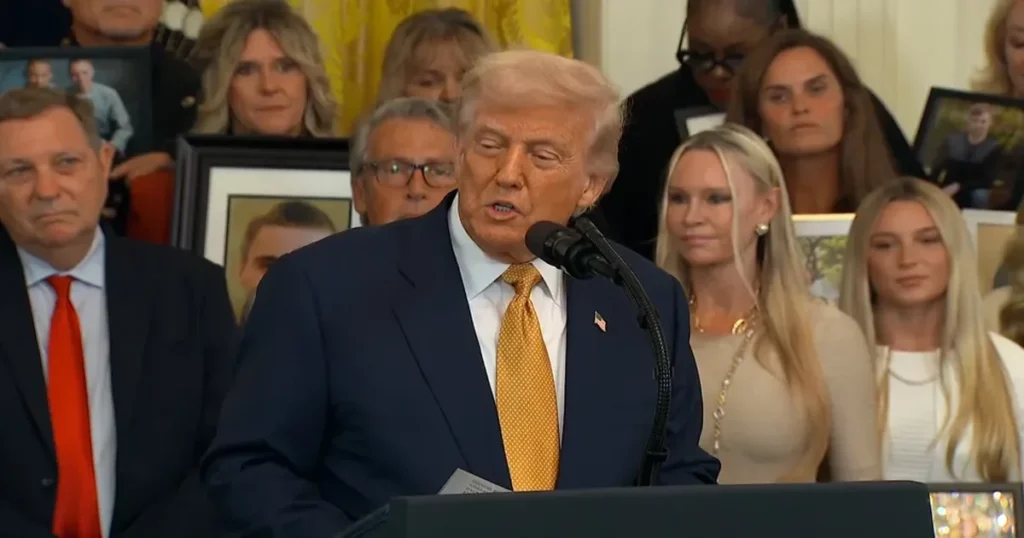
The Trump fentanyl law, signed Wednesday, permanently reclassifies fentanyl and related synthetic opioids as Schedule 1 controlled substances. This designation typically reserved for drugs with no accepted medical use and a high potential for abuse, brings significantly tougher penalties for illegal possession and trafficking. Medical uses of fentanyl remain exempt. President Trump called the legislation a “historic step toward justice” during a White House ceremony attended by families who lost loved ones to fentanyl-related overdoses. The law targets not only fentanyl, but also “copycat” substances designed to bypass previous drug classification.
What does the Trump fentanyl law mean for drug crimes in the U.S.?
With fentanyl now listed as a Scheduled 1 substance under federal law, possession, trafficking, or manufacturing of the drug will be met with steeper federal penalties. This puts fentanyl in the same legal category as heroin and LSD. Notably, the new classification also applies to chemically altered versions of fentanyl, which dealers have used to skirt prosecutions in the past.
President Trump emphasized the urgent need to act. “We’ll be getting the drug dealers, pushers and peddlers off our streets,” he said during the bill signing, which was attended by bipartisan lawmakers and families impacted by the opioid crisis.
This move fulfills a long-standing campaign promise by Trump, who has frequently blamed fentanyl for rising crime, border insecurity, and the nation’s public health crisis. It also echoes earlier action in his presidency, such as citing fentanyl as justification for tariffs on China and Canada.
However, the law excludes medically approved fentanyl, which is still legally administered for severe pain, particularly in cancer patients and end-of-life care. Medical professionals will not face new restrictions when prescribing or administering the drug with regulated protocols.
Why has fentanyl become such a major national concern?
According to data from the Centers for Disease Control and Prevention, nearly 17,000 people under the age of 34 died from fentanyl and other opioid-related overdoses in 2024 alone. The drug has been involved in some of the deadliest waves of the opioid epidemic, due to its high potency and ease of production.
Even more alarming is the growing number of child fentanyl poisoning cases. From 2018 to 2025, Scripps News documented more than 450 incidents of young children accidentally ingesting fentanyl. These included over 260 deaths, though officials say the true number is likely higher due to underreporting.
Fentanyl is often mixed with other street drugs like cocaine or counterfeit pills, making it difficult for the user to detect before it’s too late. Just two milligrams, equivalent to a few grains of salt, can be fatal.
The new law aims to close loopholes exploited by traffickers who tweak fentanyl’s chemical structure to evade existing regulation. Now, those substances will be treated just as seriously as fentanyl itself.
The bill’s supporters say this approach helps law enforcement crack down on emerging synthetic opioids without waiting for regulatory catch-up. Critics, however, argue that tougher penalties alone may not solve the crisis and could potentially lead to over-incarceration without addressing root causes such as addiction treatment and public health access.


