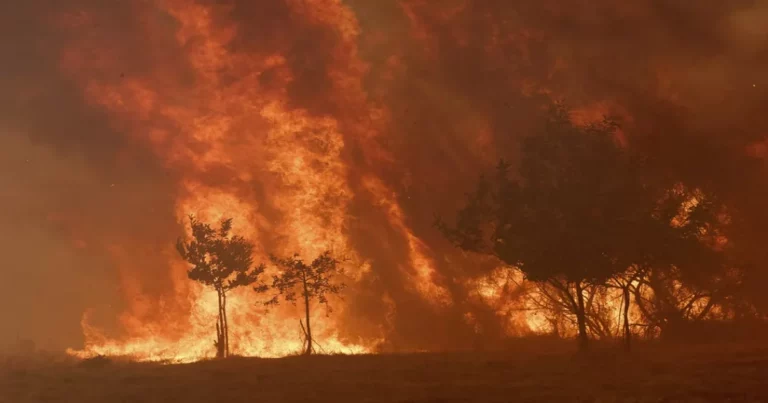
Fires in Spain persist despite the recent end of a record-setting heatwave that gripped much of southern Europe. The Spanish government announced it will declare disaster zones in northern Galicia, one of the worst-hit regions.
On Tuesday, firefighters worked for the 10th consecutive day to control a dozen active blazes that have already consumed nearly 4,000 square kilometres of woodland. Officials say this is among the most destructive fire seasons in recent decades.
Thousands of firefighters, soldiers, and water-bombing aircraft remain deployed, especially in northwestern Spain where the national weather agency AEMET continues to warn of “very high or extreme” fire risk.
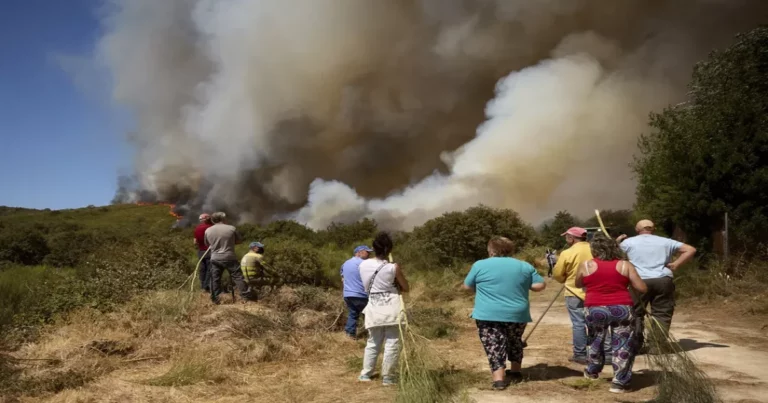
Small, sparsely populated towns in Galicia have been ravaged, with many locals forced to act before firefighting units arrived. Germany has sent teams to northern Spain, and the Interior Ministry confirmed their arrival on Tuesday.
In the Extremadura region bordering Portugal, more than 20 vehicles were deployed to combat an ongoing blaze in Jarilla.
Prime Minister Pedro Sánchez visited the area Tuesday, citing unprecedented heat as a major factor fueling the disaster. He noted Galicia’s recent daily average of over 42 degrees Celsius.
“Science tells us, common sense tells us too, especially that of farmers and ranchers, of those who live in rural areas, that the climate is changing, that the climate emergency is becoming more and more recurrent, more frequent and has an ever greater impact,” Sánchez said.
The European Forest Fire Information System reported that fires in Spain this year have killed four people and burned more than 3,800 square kilometres, an area more than twice the size of metropolitan London.
Authorities say many fires were human-caused. Police have arrested 23 people on suspicion of arson and are investigating 89 others for alleged involvement.
In Portugal, more than 3,700 firefighters battled flames Tuesday, including four major wildfires in central and northern regions. Fires there have burned 2,350 square kilometres and killed at least two people.
The area burned in Portugal is five times higher than the nearly two-decade average for this period from 2006 to 2024.
The EU’s Copernicus Climate Change Service reports Europe has warmed at twice the global average since the 1980s. Scientists warn climate change is intensifying heat and drought, making the continent increasingly vulnerable to wildfires and underscoring the urgent need for action.


