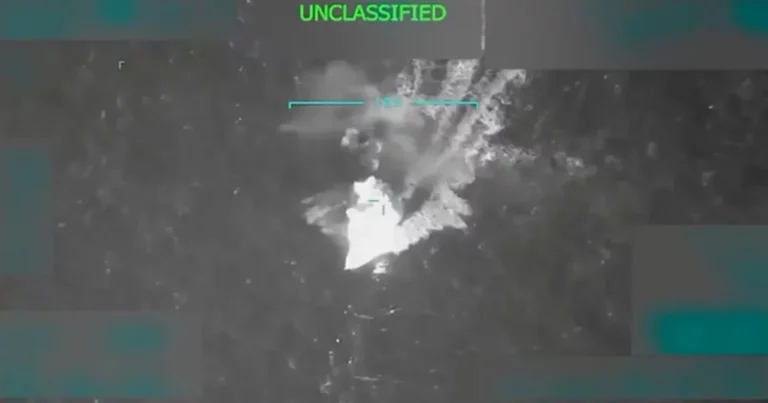
Senior U.S. officials said military operations against cartels will continue after a Sept. 2 strike killed 11 people on a Venezuelan vessel allegedly transporting narcotics, raising questions about legal authority and the decision to kill those on board.
The strike, the first known operation since President Donald Trump deployed warships to the southern Caribbean, left many details unclear, including what drugs were on the boat and what legal grounds justified the attack. Defense Secretary Pete Hegseth told FOX & Friends on Sept. 3 that the mission would not stop. “We’ve got assets in the air, assets in the water, assets on ships, because this is a deadly serious mission for us, and it won’t stop with just this strike,” Hegseth said. He added that anyone identified as a narco-terrorist in the region would face the same consequences.
Secretary of State Marco Rubio, speaking in Mexico City, said further actions were imminent. “Maybe it’s happening right now, I don’t know, but the point is the president of the United States is going to wage war on narco terrorist organizations,” Rubio said.
Trump said the crew belonged to Venezuela’s Tren de Aragua gang, designated a terrorist group earlier this year, and claimed large quantities of drugs were seized. “We have tapes of them speaking. It was massive amounts of drugs coming into our country to kill a lot of people,” Trump said, later adding that video showed the drugs “all over the boat.” The Pentagon has not provided specifics about the crew or explained why lethal force was used.
Experts raised concerns about the strike’s legality. Mary Ellen O’Connell, a professor at the University of Notre Dame, said the attack “violated fundamental principles of international law,” arguing the U.S. had no right to intentionally kill suspects on the high seas.
The decision to destroy the vessel instead of seizing it and arresting its crew was unusual and recalled tactics once used against militant groups like al Qaeda. The strike comes amid a buildup of U.S. forces in the Caribbean, with seven warships, one nuclear-powered submarine, and more than 4,500 sailors and Marines now in the region. Members of the 22nd Marine Expeditionary Unit have been training in southern Puerto Rico.
Asked about Venezuela’s ties with China, Hegseth targeted President Nicolás Maduro directly. “The only person that should be worried is Nicolas Maduro, who is … effectively a kingpin of a drug narco state,” he said. The Trump administration last month doubled its reward for Maduro’s capture to $50 million.
Venezuelan officials accuse Washington of using the naval buildup as cover for a push to remove Maduro from power. Opposition figures also voiced doubts. “How did they know there were 11 people? Did they count them? How did they know they were Venezuelan? Were their ID cards floating on the sea afterward?” former opposition presidential candidate Henrique Capriles told Reuters.
Source : Reuters.com


