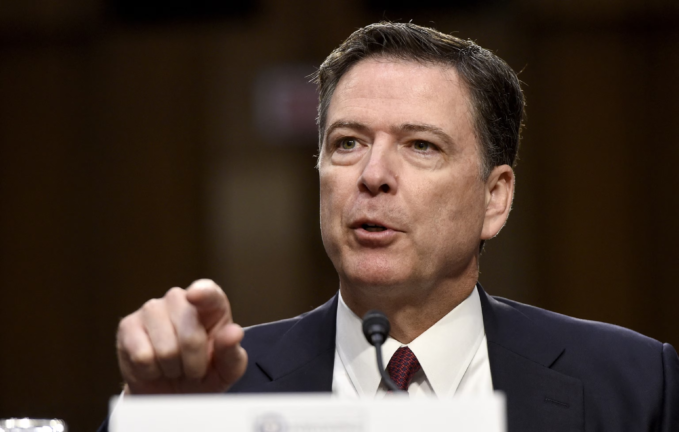
Federal prosecutors hinted they may seek to remove former FBI Director James Comey’s lead attorney, Patrick Fitzgerald, from his defense team — a move Comey’s lawyers blasted as a smear tactic meant to damage Fitzgerald’s reputation.
In a court filing late Sunday, prosecutors informed U.S. District Judge Michael Nachmanoff that Fitzgerald’s alleged role in sharing information with the media following Comey’s 2017 firing by President Donald Trump could “inform a potential conflict and disqualification issue.”
Comey, who pleaded not guilty earlier this month, faces one count of false statements and one count of obstruction of a congressional proceeding tied to his 2020 testimony before the Senate Judiciary Committee. The charges are part of what critics describe as Trump’s broader effort to target former officials he viewed as adversaries.
Prosecutors allege that in 2017, Comey used Fitzgerald as a conduit to improperly disclose classified information tied to internal memos recounting his private interactions with Trump.
However, a Justice Department inspector general report by Michael Horowitz found “no evidence that Comey or his attorneys released any classified information contained in any of the Memos to the media.”
“There is no legitimate basis to accuse either Mr. Comey or his lead counsel of criminal conduct,” Comey’s legal team wrote in its Monday response. “Likewise, there is no factual or legal foundation for claiming a ‘conflict’ — much less for attempting to disqualify lead defense counsel.”
Comey’s attorneys also expressed alarm that prosecutors may be reviewing evidence that includes privileged attorney-client communications, calling such conduct “potentially unlawful.” They urged the court to deny the Justice Department’s request for an expedited privilege review, warning that rushing the process could violate Comey’s legal rights and protections.
The dispute over Fitzgerald’s role adds another layer of tension to a case already defined by political overtones. Fitzgerald — a longtime friend of Comey and a prominent former federal prosecutor — has argued that the appointment of Lindsey Halligan, the U.S. attorney who brought the charges, was unlawful.
According to sources familiar with the case, Halligan proceeded with Comey’s indictment despite internal objections from career prosecutors. A grand jury ultimately charged Comey on two of three counts related to his 2020 testimony about the FBI’s Russia investigation and alleged leaks to the media — accusations Comey has repeatedly denied.
Fitzgerald has indicated that his upcoming court filings will argue that the case represents “vindictive prosecution” driven by Trump’s personal vendetta. He is expected to cite Trump’s history of public statements demanding Comey’s imprisonment and reports that Trump pressured senior officials, including Attorney General Pam Bondi, to move forward with the case.
Legal experts say such claims are difficult to prove, but the circumstances surrounding Comey’s prosecution — including Trump’s removal of a senior federal prosecutor who opposed bringing charges — make this a rare test of the limits of political influence over the justice system.


