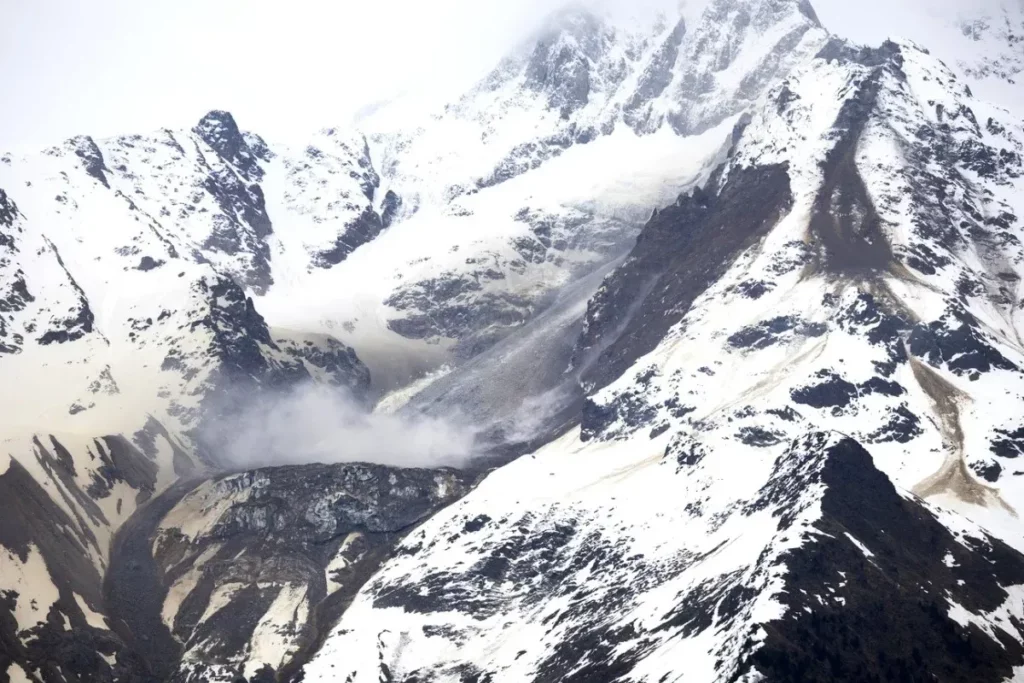
A catastrophic Swiss glacier collapse has buried the Alpine village of Blatten under tons of ice, mud, and rock, leaving one person missing and raising concerns about climate change’s impact on glacial stability.
Swiss Glacier Collapse Triggers Massive Landslide in Blatten
On May 28, 2025, a significant portion of the Birch Glacier in the Swiss Alps collapsed, unleashing a torrent of debris that engulfed approximately 90% of Blatten, a village in the Lotschental Valle. The landslide occurred around 3:30 p.m. local time, shortly after authorities had evacuated the village’s 300 residents due to warning about the glacier’s instability.
Despite the evacuation, a 64 year old man remains unaccounted for. Search and rescue operations, including drone surveillance and thermal imaging, are ongoing to locate the missing individual.
Climate Change and the Risk of Swiss Glacier Collapse
Experts suggest that rising temperatures and melting permafrost in the Alps may have contributed to the Swiss glacier collapse. The destabilization of glacial structures due to climate change increases the likelihood of such catastrophic events, posing significant risks to Alpine communities.
The Birch Glacier’s collapse is one of the most devastating in recent Swiss history, highlighting the urgent need for monitoring and mitigating climate related hazards in mountainous regions.
Community Response and Future Precautions
Blatten’s mayor, Matthias Bellwald, expressed deep sorrow over the disaster, stating, “We’ve lost our village, but not our heart. We will support each other and rebuild.”
The Swiss government has pledged support for the affected residents and is assessing the structural integrity of nearby glaciers to prevent future incidents. The Swiss glacier collapse serves as a stark reminder of the challenges posed by a warming climate and the importance of proactive measures to safeguard worldwide communities.


