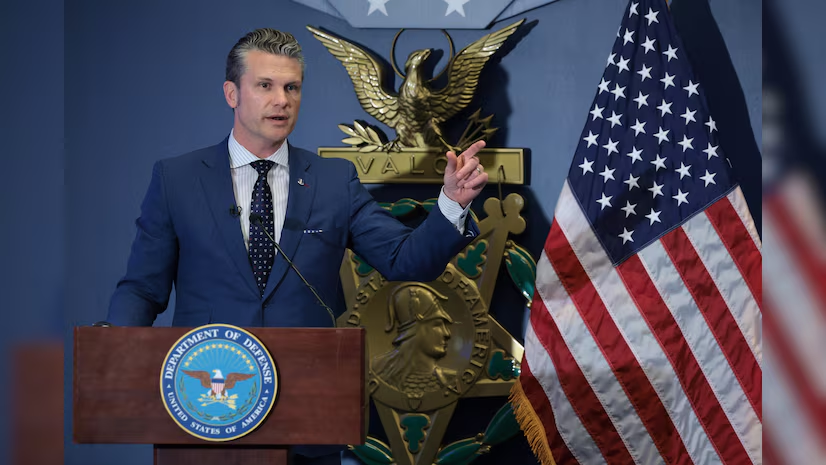
Pete Hegseth, President Trump’s newly appointed Secretary of Defense, is taking an increasingly active role across the Middle East as tensions escalate following the recent Israeli strikes on Iranian targets. On June 13, 2025, the Pentagon, under Hegseth’s leadership, repositioned two U.S. destroyers to the Eastern Mediterranean to bolster missile defense in support of Israel, while also authorizing the voluntary departure of military dependents from several regional bases.
Hegseth’s strategy, which also includes advising President Trump on Middle East policy under the “America First” doctrine, reflects a dual focus: reinforcing defensive readiness and mitigating risk to U.S. families abroad. The two Aegis equipped destroyers, already present in nearby waters, enhance Israel’s missile interception capabilities and provide strategic flexibility in an increasingly unpredictable climate.
In parallel, on June 11, he authorized dependents stationed in Bahrain, Kuwait, Qatar, Iraq, and Syria to leave voluntarily due to heightened security concerns stemming from Iran’s threat of retaliation. Pentagon officials emphasized this step ensure family safety without affecting troop deployment.
Hegseth’s appointment has been controversial: critics argue his lack of defense experience has fostered mismanagement and internal turmoil at the Pentagon. Despite that, his assertive posture in the Middle East demonstrates his growing influence over U.S. military policy in the region.
His handling of the region further underscore how the Trump administration’s maximum pressure campaign aims to counter Iranian influence. That campaign, reinstated in early 2025, includes heightened sanctions and preventive military posturing including deployments to counter Iran-backed Houthi threats in Yemen and support for allied maritime security efforts.
In Congressional testimony last week, Hegseth faced sharp criticism for “Signalgate,” a leak of secret discussions across a Pentagon chat that raised concerns about operational security, as well a controversial proposals for possible military interventions in Greenland and Panama.
Yet, his decisive actions in the Middle East from naval deployments to support of Israel, to ensuring U.S. family safety reveal Hegseth’s ambition to assert strong military leadership in volatile circumstances. Whether this will translate into cohesive long-term strategy or deepen internal fractures remains a matter of debate among U.S. and allied policymakers.


