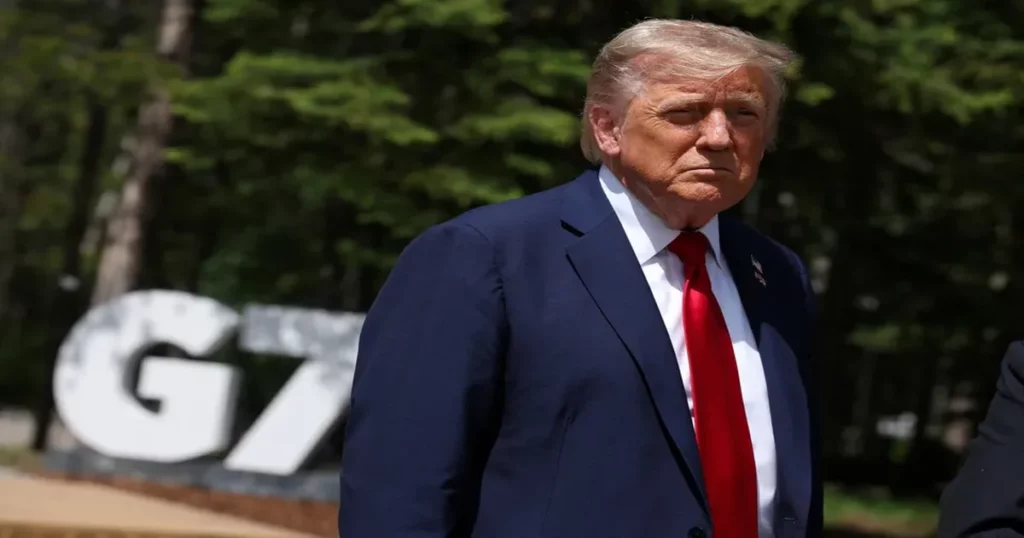
In an unexpected move on June 16, 2025, President Trump cut short his participation in the G7 summit at Kananaskis, Canada, citing urgent developments in the Middle East, a decision that market a dramatic shift in the agenda of the summit. The White House confirmed that Trump would return to Washington that evening to address unspecified “important matters,” primarily linked to the rising conflict between Israel and Iran.
Trump’s abrupt withdrawal followed his public recommendation, echoing Israeli military warnings, that residents of Tehran should evacuate immediately amid fears of escalating strikes. His early departure meant missing critical summit events, including scheduled bilateral talks with Ukrainian President Zelenskiy and Mexican President Sheinbaum.
This shift underscores how the Trump G7 narrative was overshadowed by the Middle East crisis, as tensions surged with Israeli airstrikes on Iran triggering Iranian threats and alarming global leaders. The summit’s broader agenda on trade and global operation was effectively sidelined as defense and diplomacy became paramount.
At the gathering, Trump had signed preliminary agreements like tariff reductions with UK but his refusal to endorse a G7 joint statement urging de-escalation revealed growing isolation from allies. He instead reiterated his hardline stance : “Iran want to talk after strikes, but they must abandon nuclear ambitions,” he said, avoiding direct support for global calm or joint action.
Canada’s hosting Prime Minister Mark Carney expressed disappointment, having hoped the summit would focus on trade and climate. Australian leaders were similarly caught off-guard, with Prime Minister Albanese left without a planned bilateral meeting, exposed to a broader diplomatic snub.
Back in Washington, Trump’s return agenda remains confidential, but insiders suggest he will oversee contingency planned tied to escalating military alerts and potential assistance to Israel. Meanwhile, the U.S. position at the G7 was further strained when President Trump blocked consensus language urging both Israel and Iran to de-escalate, reinforcing the Trump G7 portrayal of a summit derailed by unilateral decisions.
As he heads back to the White House, Trump’s G7 exit begs new questions: Will diplomatic talks be reshuffled? Can he reconcile fractured alliances after sidelining key trade and security discussions? And how will his focus on the Middle East crisis shape America’s role in ongoing negotiations, or military planing in the coming days?


