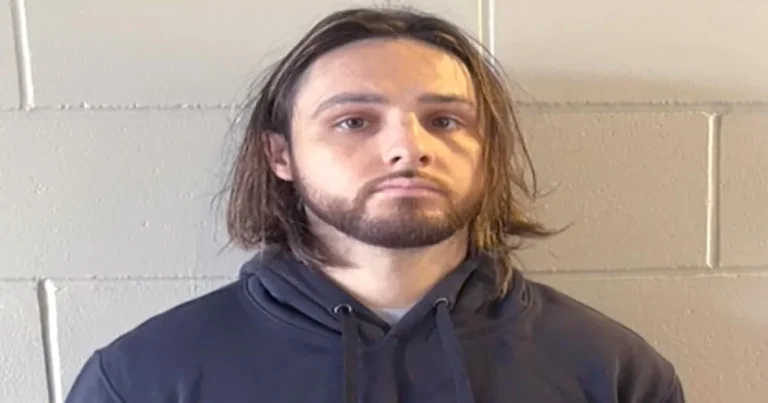
Federal prosecutors allege that the most destructive fire in Los Angeles history — the Pacific Palisades inferno that tore through Malibu and surrounding neighborhoods in January — began as a small blaze intentionally set days earlier by a Florida Uber driver.
Officials announced Wednesday the arrest of 29-year-old Jonathan Rinderknecht, who is accused of deliberately starting a hillside fire near the Skull Rock hiking trail on New Year’s Day, sparking a sequence of events that ultimately led to the massive Palisades disaster.
Rinderknecht faces federal charges of destruction of property by fire, carrying a mandatory minimum sentence of five years in prison.
“We can’t reverse the destruction or loss of life, but this arrest delivers a measure of justice to the victims,” said Bill Essayli, acting U.S. Attorney for the Central District of California.
Digital Evidence and Disturbing Clues
Investigators say they found damning digital evidence linking Rinderknecht to the ignition point. Among his phone data was an image he created using ChatGPT — a computer-generated depiction of a burning city.
Authorities also cited location data, videos filmed at the scene, and online searches that painted a picture of premeditation.
“The evidence shows this fire was no accident,” Essayli said.
Timeline: From Small Blaze to Historic Catastrophe
According to an ATF affidavit, the first fire — dubbed the Lachman Fire — broke out at 12:17 a.m. on Jan. 1 on a hillside above Pacific Palisades. Rinderknecht allegedly ignited dry vegetation with an open flame, “likely a lighter,” near a sign explicitly warning, “No Fires or Smoking.”
The affidavit says Rinderknecht had dropped off an Uber passenger nearby before driving to the Skull Rock trailhead. Witnesses told authorities he appeared agitated and angry that night.
At about 11:38 p.m., investigators say he attempted to contact a former friend through Facebook Messenger before walking up the trail to a secluded area called the Hidden Buddha clearing, where he often went to meditate.
Using his iPhone, Rinderknecht recorded videos and played the French rap song “Un Zder, Un The,” whose video depicts a trash can being set on fire. He reportedly listened to the song repeatedly in the days before the incident.
Surveillance cameras operated by UC San Diego picked up the first signs of flames around 12:12 a.m.
911 Calls and ChatGPT Query
Within minutes of allegedly setting the blaze, Rinderknecht attempted to call 911 several times but could not connect due to poor service. When he finally reached emergency operators, he was at the bottom of the trail — after a nearby resident had already reported the fire.
While still on the phone, investigators say Rinderknecht typed a question into ChatGPT:
“Are you at fault if a fire is lit because of your cigarettes?”
He then left the area, driving past fire engines rushing toward the flames. According to the affidavit, he later claimed to have offered firefighters assistance, though phone data placed him at the scene when the fire began.
A Fire Rekindled
Firefighters contained the original eight-acre blaze within hours, declaring it fully extinguished by dawn on Jan. 1. Crews used hose lines and water-dropping helicopters but did not maintain overnight monitoring.
Six days later, amid hurricane-force winds, embers buried deep in the soil reignited the hillside — transforming into the Palisades Fire, which destroyed 6,800 structures, burned 23,400 acres, and killed 12 people.
Los Angeles Mayor Karen Bass called the event “one of the darkest moments in our city’s history.”
“Each day that families remain displaced is one day too many,” Bass said. “Today’s charges are a crucial step toward accountability and closure.”
Investigators Divided Over Fire Department Response
Some fire experts have questioned whether the Los Angeles Fire Department (LAFD) should have done more to ensure the original fire was completely extinguished.
“This affidavit raises serious questions,” said Ed Nordskog, former head of the L.A. County Sheriff’s arson unit. “A commission should examine why a supposedly contained fire was allowed to reignite.”
LAFD officials declined to confirm whether thermal imaging — a standard method for detecting hidden hot spots — was used that night.
Kenny Cooper, the ATF’s special agent in charge, defended the department’s actions, insisting the rekindling was beyond firefighters’ control.
“This was a subterranean burn, deep in the root system,” Cooper said. “The person who started it bears full responsibility.”
Cross-Country Arrest and False Statements
After the blaze, Rinderknecht left California for Florida, where he was arrested Tuesday. Investigators allege he lied to authorities, claiming he first saw the flames only after leaving the clearing.
But GPS data and phone logs contradict his story, placing him at the exact ignition site at the time of the first 911 call.
A friend told agents Rinderknecht was familiar with the area and had been emotionally unstable in the weeks leading up to the incident.
He remains in federal custody in Florida. His attorney of record has not yet been identified.
Historical Parallels
Experts note that major wildfires have reignited from “extinguished” burns before. The 1991 Oakland Hills fire reignited from a six-acre blaze firefighters had contained the previous day, ultimately consuming 2,500 homes. Similarly, the 2023 Maui fire, which killed 101 people, flared up from a dormant brush fire triggered by downed power lines.
“It’s rare but not unprecedented for deep-rooted embers to reignite days later,” said fire science researcher Dr. Nathan Villalobos. “But what makes this case unique is the human intent behind the original spark.”


