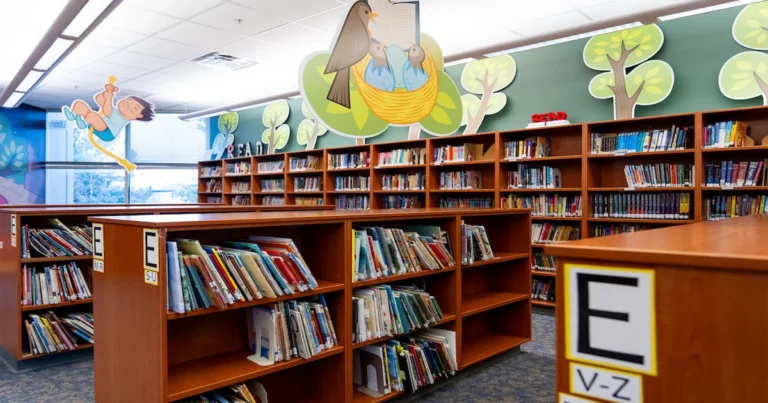
Florida law banning school library books was ruled “overbroad and unconstitutional” by a federal trial judge this week.
Judge Carlos Mendoza, appointed by President Barack Obama and serving in the Middle District Court of Florida, issued a summary judgment in the case filed against HB 1069, a 2023 law restricting materials labeled as “pornographic.”
The lawsuit, filed a year ago by several book publishers, challenged the state’s interpretation of “pornographic” and “describes sexual conduct,” calling the terms unconstitutional.
“By leaving these items undefined, Florida has given parents license to object to materials under an ‘I know it when I see it’ approach,” Mendoza wrote in his 50-page ruling, noting the absence of a clear definition.
Publishers Penguin Random House, Hachette Book Group, HarperCollins Publishers, Macmillan Publishing, and Simon & Schuster argued the law disregarded the literary or artistic merit of works.
According to Mendoza, the statute “does not evaluate the work to determine if it has any holistic value,” a critical legal measure for determining obscenity.
“Educators must again perform statutory interpretation on the fly to determine what exactly is ‘inappropriate’ or ‘unsuitable’ because those terms go undefined. All the while, the specter of harsh penalties looms in the background,” he wrote.
In recent months, the Florida Department of Education has publicly pressured superintendents and threatened penalties regarding school library content.
Additional plaintiffs included The Authors Guild, John Green, Jodi Picoult, and several parents.
Books referenced in the case included “The Color Purple,” “I am Not Your Perfect Mexican Daughter,” “Paper Towns,” “The Kite Runner,” “The Handmaid’s Tale,” “Water for Elephants,” and “Homegoing.”
“None of these books are obscene,” Mendoza concluded.
The judge found that the word “pornographic” in the statute effectively meant “harmful to minors.”
Earlier this year, a Florida Senate committee considered clarifying what school boards should classify as “harmful to minors.” The effort stalled after concerns over First Amendment violations.
Dan Novack, an attorney representing the publishers, called the ruling “a sweeping victory for the right to read, and for every student’s freedom to think, learn, and explore ideas,” in a statement to the Florida Phoenix.
“We are elated that the federal court in Florida has upheld the First Amendment rights of students, educators, authors, and publishers. The Court ruled that books may only be removed from school libraries if they lack serious literary, artistic, political, or scientific value when considered as a whole,” Novack said.


