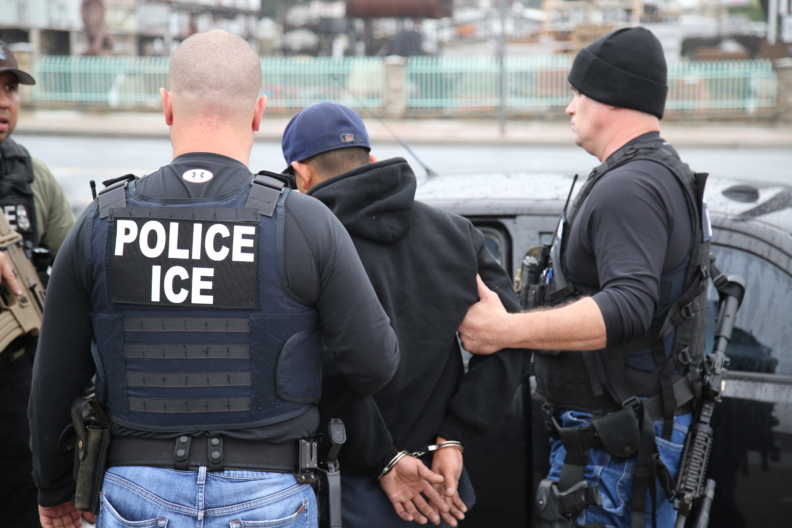
The head of U.S. Immigration and Customs Enforcement (ICE) has spoken out in defense of his agents, justifying their use of masks during field operations and expressing strong opposition to sanctuary jurisdictions. In a statement this week, the ICE chief defended agents amid growing criticism from immigrant rights advocates and some local leaders.
The agency has faced scrutiny for deploying officers in face coverings, particularly during recent operations in areas with limited cooperation from local law enforcement. According to the ICE chief, wearing masks is not about secrecy, but rather to protect agents’ identities and ensure operational safety in high risk zones.
“Wearing a mask isn’t about hiding it’s about protection,” the ICE chief said while defending agents. “In many of these jurisdictions, our officers are entering dangerous territory with no backup from local authorities.”
The remarks also included sharp criticism of sanctuary jurisdictions, which the ICE chief claims are hindering national immigration enforcement and allowing criminal non citizens to avoid deportation. He called for stronger federal cooperation and greater accountability at the local level.
The ICE chief defends agents by pointing to recent operations where masked officers successfully apprehended undocumented individuals with serious criminal histories. According to the agency, the use of masks prevented retaliation against agents and their families.
Critics argue that masked ICE operations create fear and erode trust in immigrant communities, especially in cities with pro immigrant policies. Civil rights organizations have voiced concern that these tactics resemble those used in authoritarian regimes.
However, the ICE chief remains firm, stating that the agency’s mission is to uphold immigration law regardless of public pressure. “We don’t ask permission to enforce the law,” he said. “We do our job and we do it safely.”
As the debate over immigration enforcement intensifies, the comments made the ICE chief defends agent will likely fuel further political discourse, especially in an election year.


