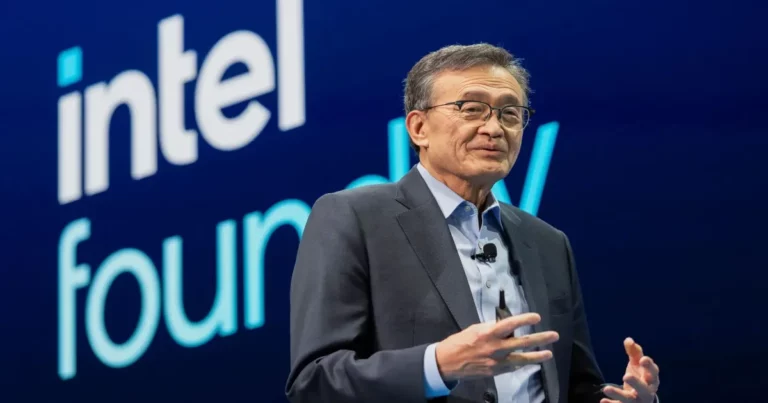
Intel’s stock price declined Thursday following President Donald Trump’s public demand for the immediate resignation of CEO Lip-Bu Tan. In a Truth Social post, the president declared Tan “highly CONFLICTED” and stated resignation represented the only solution, though he provided no specific details about the alleged conflicts.
The semiconductor giant did not immediately respond to requests for comment regarding Trump’s statement or the subsequent market reaction. Tan assumed leadership at Intel in March 2025, taking over from Pat Gelsinger during a challenging period for the company.
The president’s criticism coincided with national security concerns raised by Senator Tom Cotton (R-Ark.) about Tan’s professional connections to Chinese technology firms. In a letter to Intel’s board chair, Cotton referenced Tan’s previous role as CEO of Cadence Design Systems and questioned whether the executive had maintained problematic ties to Chinese entities, including those linked to the People’s Liberation Army.
“Mr. Tan’s associations raise questions about Intel’s ability to fulfill these obligations as a steward of American taxpayer dollars,” Cotton wrote, noting Intel’s receipt of federal CHIPS Act funding. The senator specifically inquired whether Tan had divested from Chinese semiconductor companies with military connections.
Reports from April revealed Tan’s investment history includes backing several Chinese tech firms through venture capital activities. These financial connections have drawn scrutiny as U.S.-China technology competition intensifies and Washington imposes stricter controls on semiconductor exports.
The leadership controversy emerges as Intel implements significant operational changes. Recent quarterly earnings surpassed analyst expectations, but the company announced substantial cost-cutting measures, including scaling back its foundry operations that reported $3.17 billion in losses.
Tan’s restructuring plans canceled planned fabrication plants in Germany and Poland while consolidating Asian operations in Vietnam and Malaysia. The company also slowed construction of a major Ohio facility that had received substantial state and federal support.
Market analysts suggested the political developments compounded existing investor concerns about Intel’s strategic direction and competitive position against rivals like TSMC and Samsung. The company’s shares underperformed the broader semiconductor sector throughout Thursday’s trading session.
Neither the White House nor Senator Cotton’s office provided additional details about potential administration actions regarding Intel’s leadership or its federal contracts. Industry observers noted the unusual nature of a sitting president directly calling for a major defense contractor’s CEO to step down without formal regulatory proceedings.


