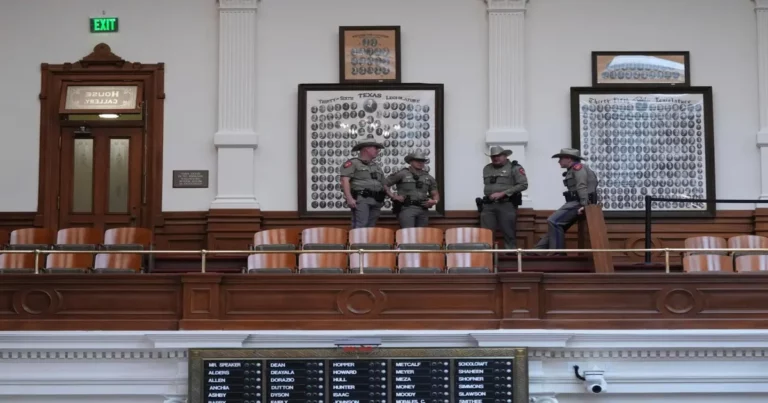
Texas House Democrats returned to Austin this week after a two‑week walkout, only to find state troopers posted outside their offices and trailing them to lunch, the bathroom and even home. The unusual surveillance, which Republicans insisted upon to prevent another quorum‑breaking protest over congressional redistricting, included requiring each returning member to sign a form agreeing to round‑the‑clock monitoring. One lawmaker, Fort Worth Democrat Nicole Collier, refused to sign and slept on the House floor rather than submit to what she called “intimidation and discrimination.” “I will not sign away my dignity,” she said.
The heavy police presence follows an extraordinary partisan clash that saw more than 50 Democrats leave Texas on Aug. 3, denying the GOP‑controlled House the attendance needed to pass a new map that could send five more Republicans to Washington. Republicans currently hold 25 of the state’s 38 U.S. House seats. With the lawmakers back in the chamber, Speaker Dustin Burrows gaveled in a new special session and told members “we aren’t playing around” as he vowed swift action on the Legislature’s agenda, which now includes redistricting and flood relief. Houston representative Ann Johnson said deploying officers as escorts was a waste of taxpayer money, noting that each Democrat already came back voluntarily: “Instead of having a police officer on the streets — actually working on or taking care of crime and being on the beat — they want to send a police officer with each and every Democrat.” Her colleague Gene Wu echoed that sentiment, saying he didn’t care about signing permission slips so much as “they are going to waste public safety resources to escort us.”
Outside the Capitol, the fight has spilled west. Hours after Texas lawmakers returned, Democrats in California’s legislature formally introduced a partisan congressional map designed to add up to five seats to their party’s majority, setting up a November referendum to override the state’s independent commission. Assembly member Marc Berman, a Democrat who previously chaired the elections committee, said he didn’t want this fight but argued that “with our democracy on the line, we cannot run away from this.” Republicans in Sacramento promised lawsuits and accused Democrats of the very partisan gerrymandering they had decried in Texas.
The tit‑for‑tat between the nation’s two most populous states underscores the high stakes of redistricting heading into the 2026 midterms. President Donald Trump has pressed Republican governors to shore up the party’s narrow U.S. House majority and avoid a repeat of the midterms during his first presidency, when Democrats seized control and twice impeached him. Democratic governors in other states have indicated they may follow California’s lead if Texas Republicans approve their map. With only a few dozen House districts considered competitive nationwide, even incremental shifts in Texas or California could tip control of Congress. Texas Democrats say they will challenge the new map in court, but for now the GOP has the votes to deliver Trump the districts he wants while the police stand guard to make sure no one leaves the chamber again.


