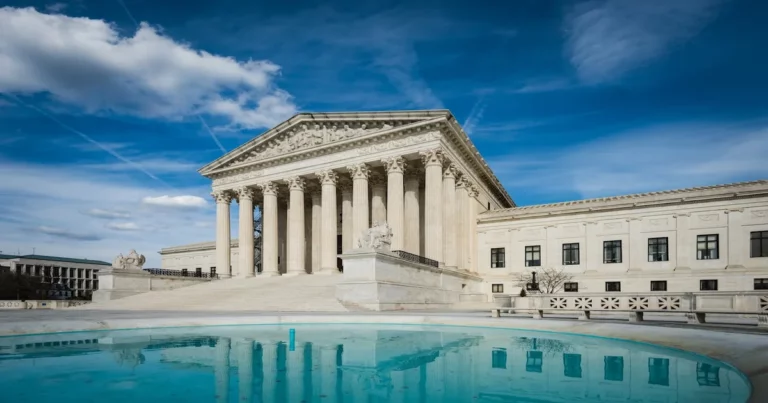
Supreme Court allows Trump officials to cut research funding in a decision that permits hundreds of millions of dollars in reductions to federal programs.
On Thursday, the court ruled that the Trump administration can move forward with $783 million in cuts made by the National Institutes of Health to align with Donald Trump’s priorities. The 5-4 ruling lifted a lower court’s order that had blocked the reductions.
Chief Justice John Roberts joined the three liberal justices in dissent. Justice Amy Coney Barrett cast a key vote to keep the administration’s anti-DEI guidance on future funding blocked, even as the cuts already made were allowed to proceed.
The decision marked a significant victory for Trump, giving his administration the ability to cancel hundreds of grants while the lawsuit continues. Plaintiffs, which include states and public-health advocacy groups, argued that the cuts will cause “incalculable losses in public health and human life.”
The Justice Department countered that funding decisions should not be “subject to judicial second-guessing” and said that policies tied to diversity, equity, and inclusion could “conceal insidious racial discrimination.”
The lawsuit involves a portion of the estimated $12 billion in NIH research projects that have been cut. In its emergency appeal, the administration also challenged nearly two dozen other judicial rulings that had blocked funding reductions.
Solicitor General D. John Sauer argued that those cases should not be considered under existing rulings and should instead be sent to federal claims court. He cited a previous Supreme Court decision that cleared the way for teacher-training program cuts linked to DEI.
Five conservative justices agreed, and Justice Neil Gorsuch issued a brief opinion criticizing lower courts for disregarding earlier high court rulings. “All these interventions should have been unnecessary,” Gorsuch wrote.
The plaintiffs, including 16 Democratic state attorneys general and public-health advocacy groups, argued unsuccessfully that research grants differ fundamentally from teacher-training contracts and could not be sent to claims court. They warned that defunding studies midway interrupts research, undermines collected data, and damages long-term scientific progress by disrupting careers.
Justice Ketanji Brown Jackson filed a detailed dissent, criticizing both the outcome and the court’s continued use of its emergency appeals process. “This is Calvinball jurisprudence with a twist. Calvinball has only one rule: there are no fixed rules. We seem to have two: that one, and this administration always wins,” she wrote, citing the comic strip Calvin and Hobbes.
In June, U.S. District Judge William Young of Massachusetts had ruled that the cancellations were arbitrary and discriminatory. At a hearing, Young, a Reagan appointee, said, “I’ve never seen government racial discrimination like this.” He later added, “Have we no shame?”
An appeals court had left Young’s ruling in place before Thursday’s Supreme Court decision overturned it.


