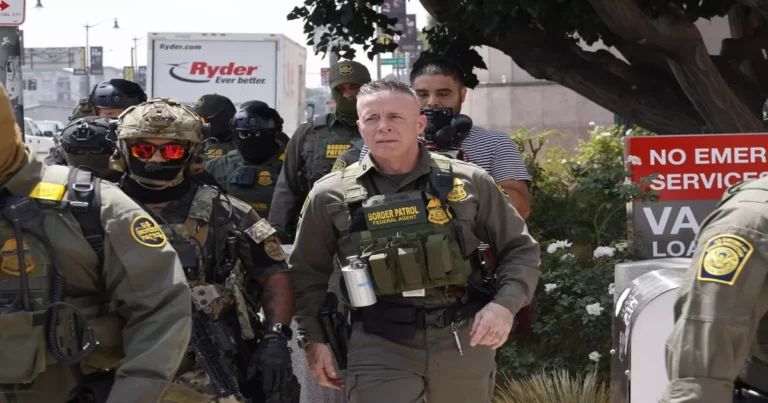
The Supreme Court on Monday ruled in favor of the Trump administration, allowing immigration agents to stop and detain individuals in Los Angeles suspected of being in the U.S. illegally based on limited factors such as their language, race, or place of employment.
In a 6-3 decision, the justices overturned a lower court order that prohibited agents from relying on race or ethnicity, language, location, or type of work, either alone or combined, to justify detentions. The ruling reinstates “roving patrols” in Southern California, where agents can stop people on the streets with little evidence beyond appearance or circumstance.
Los Angeles Mayor Karen Bass condemned the decision, calling it an attack on the city. “Today, the highest court in the country ruled that the White House and masked federal agents can racially profile Angelenos with no due process, snatch them off the street with no evidence or warrant, and take them away with no explanation. This decision will lead to more working families being torn apart,” she said, pledging to continue fighting for residents’ rights and safety.
Justice Sonia Sotomayor issued a sharp dissent, criticizing the majority for misusing the emergency docket. “We should not have to live in a country where the Government can seize anyone who looks Latino, speaks Spanish, and appears to work a low wage job,” she wrote. She warned that the decision effectively declares Latinos fair game for detention until they prove legal status.
The Supreme Court ruling reverses a July decision by U.S. District Judge Maame Ewusi-Mensah Frimpong, who found evidence that federal agents targeted people at places like car washes, Home Depot lots, and swap meets based on race or language. She had barred such practices, ordered that detainees be granted 24-hour access to lawyers, and required confidential phone lines at the B-18 downtown detention facility.
The lawsuit that led to Frimpong’s order was filed by immigrant rights groups, the ACLU, and private attorneys on behalf of several immigrants and two U.S. citizens. They alleged agents detained people without warrants, failed to identify themselves, and relied on racial profiling to make arrests.
The Supreme Court’s decision comes shortly after an immigration appellate board upheld a Trump administration policy denying bond hearings to immigrants who entered the country without authorization. That ruling expands mandatory detention to thousands already held and potentially millions more nationwide, limiting the discretion of immigration judges to release individuals deemed low risk.


