Tensions between the United States and Venezuela escalated Tuesday after President Donald Trump confirmed that the U.S. Navy struck a vessel in the southern Caribbean allegedly carrying Venezuelan drugs.
Speaking during an Oval Office event, Trump said the strike had just occurred. “Over the last few minutes, (we) literally shot out a boat, a drug carrying boat, a lot of drugs in that boat,” he told reporters.
Shortly after, Secretary of State Marco Rubio confirmed the incident on social media, calling it a “lethal strike” on a vessel run by a “designated narco-terrorist organization.”
Trump later posted on Truth Social that 11 people were killed in the attack, describing them as “terrorists” and claiming they were members of Venezuela’s Tren de Aragua gang. He also released a video labeled “unclassified,” showing a strike on a small speedboat fitted with four outboard motors.
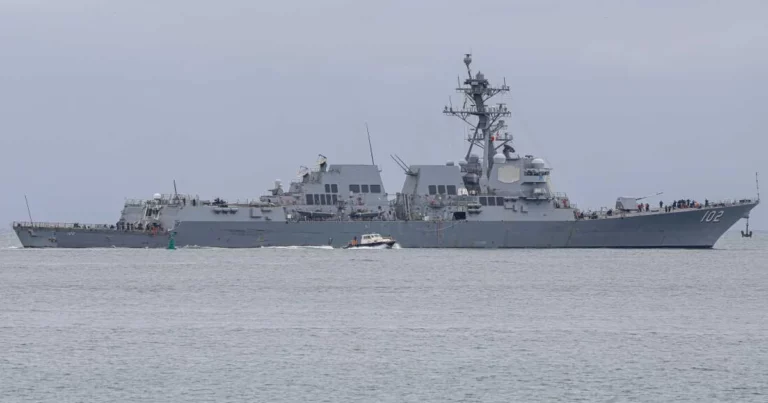
The action came amid the Trump administration’s growing confrontation with the Venezuelan government. Washington has accused President Nicolás Maduro of leading a drug cartel and placed a $50 million bounty on him. Just over a week ago, the U.S. deployed warships, including the Iwo Jima Amphibious Ready Group, to waters off Venezuela’s coast in what was described as a major show of force.
Maduro has responded by accusing the United States of plotting to overthrow his government. He declared “maximum preparedness” across the country, saying 4.5 million militia members were ready to defend Venezuela. State-run network Telesur has broadcast footage of Venezuelans, including fishermen and ordinary citizens, called into military service.
Maduro began a third six-year term in January 2025 after an election widely denounced as fraudulent. He has used Washington’s actions to rally support domestically and abroad. As of Tuesday, Venezuelan officials had not issued a response to Trump’s announcement or the reported strike.
During Trump’s first term, U.S. warships were also sent to the region, but the deployments had little effect. James Story, former U.S. Ambassador to Venezuela and a former State Department official on narcotics issues, told NPR that the administration’s Venezuela strategy lacked consistency. He noted that in July, the U.S. renewed a license allowing Chevron to continue operations in the country, despite the confrontational stance against Maduro.
Source : NPR.org


