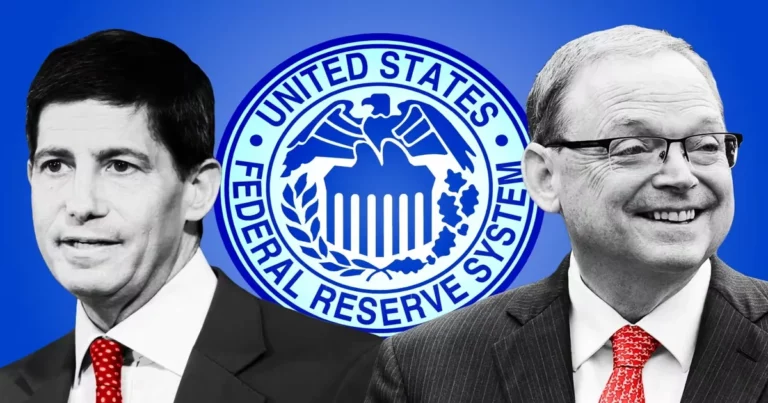
President Donald Trump revealed Wednesday that Kevin Hassett and Kevin Warsh have emerged as leading candidates to replace Federal Reserve Chair Jerome Powell when his term concludes in May 2026. The announcement comes as tensions escalate between the White House and the central bank over interest rate policy.
“We’ve started the interview process,” Trump said during a press briefing. “The two Kevins are absolutely… they’re both very good.” The president’s comments follow months of public criticism directed at Powell, whom Trump has repeatedly chastised for maintaining current interest rates between 4.25% and 4.5%.
Hassett, currently serving as director of the National Economic Council, and Warsh, a former Fed governor, have both advocated for lower borrowing costs – a position that aligns with Trump’s economic agenda. The selection process gained new urgency following the unexpected resignation of Fed Governor Adriana Kugler last week.
“Trump clearly wants someone who will support his economic vision,” said Stephen Moore, an economist with close ties to the administration. Analysts note the president’s preference could signal a shift toward more politically influenced monetary policy at the traditionally independent central bank.
While Warsh brings extensive Fed experience, some investors question whether his past hawkish tendencies might conflict with Trump’s aggressive rate cut demands. Hassett, though less experienced in central banking, has consistently supported the president’s economic policies.
The White House declined to comment on specific candidates, though Trump indicated he would first appoint a temporary replacement for Kugler before nominating a permanent chair. The eventual nominee will require Senate confirmation, where political considerations may complicate the approval process.
Market observers continue to monitor the situation closely, as the leadership transition could significantly impact future monetary policy decisions and the Fed’s operational independence.


