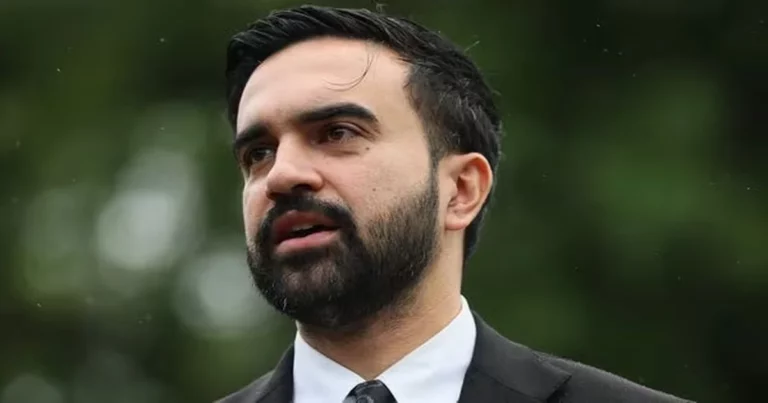
Zohran Mamdani, the Democratic nominee for New York City mayor, has reiterated a controversial campaign pledge to order the arrest of Israeli Prime Minister Benjamin Netanyahu if he visits the city, citing an International Criminal Court (ICC) warrant for war crimes in Gaza. The proposal, which legal experts call legally unworkable and politically volatile, sets the stage for a potential clash with the federal government and highlights deepening divisions over Israel-Palestine politics in the U.S..
Mamdani’s Justification and Broader Intent
Mamdani, a state assemblyman and democratic socialist leading in polls for the November election, framed his pledge as a moral imperative. In an interview with The New York Times, he declared Netanyahu a “war criminal” committing “genocide in Gaza” and vowed to enforce the ICC’s arrest warrant upon the Israeli leader’s arrival in New York. He also extended the threat to Russian President Vladimir Putin, who faces an ICC warrant for alleged war crimes in Ukraine.
Defiance of Federal Authority: Mamdani cited former San Francisco Mayor Gavin Newsom’s 2004 decision to issue same-sex marriage licenses despite federal law as a precedent for local leaders challenging federal inaction. “This is a moment when cities and states must demonstrate what it looks like to stand up for our values,” he argued.
Political Symbolism: The pledge aligns with Mamdani’s progressive base, which strongly criticizes Israel’s military actions in Gaza. A New York Times/Siena poll found 43% of likely voters prefer his approach to the Israeli-Palestinian conflict, compared to 16% for rival Andrew Cuomo.
Legal and Practical Hurdles
Legal scholars universally dismissed Mamdani’s proposal as unenforceable, citing jurisdictional and constitutional barriers:
Federal Preemption: The U.S. is not a party to the ICC and has explicitly rejected its jurisdiction. The 2002 American Servicemembers’ Protection Act prohibits state and local cooperation with the court, though an amendment allows federal action for genocide or war crimes cases.
Head of State Immunity: Matthew Waxman, a Columbia Law School professor and former Bush administration official, noted that Netanyahu, as a sitting head of state, enjoys immunity under international law. Waxman called Mamdani’s vow “more a political stunt than a serious law-enforcement policy” .
NYPD Authority: Even if Mamdani ordered an arrest, the NYPD lacks jurisdiction to enforce ICC warrants. Beth Van Schaack, former U.S. Ambassador for Global Criminal Justice, acknowledged theoretical pathways for arrest under federal law but emphasized local police would not be empowered to act .
Political Repercussions and Public Reaction
The pledge has intensified debate in New York, home to the world’s largest Jewish diaspora outside Israel:
Jewish Community Divisions: While Mamdani holds a slim lead among Jewish voters (34%), older Jews largely view his stance as threatening. Rival Andrew Cuomo, a staunch Israel supporter, volunteered to join Netanyahu’s legal defense team .
Federal Backlash: President Trump, who hosted Netanyahu at the White House in July, warned Mamdani would face “big problems” if he pursued the arrest. Netanyahu himself dismissed the threat as “silly” .
Electoral Strategy: Mamdani’s focus on Netanyahu contrasts with his moderation on other progressive issues, suggesting a calculated appeal to left-wing voters. Polls show his Israel stance motivated 62% of his primary supporters .
Broader Implications for International Law
Mamdani’s proposal highlights tensions between local activism and federal foreign policy:
- Symbolic Challenge: While impractical, the pledge underscores growing grassroots support for international accountability mechanisms, particularly among young voters
- Precedent Risk: Experts warn such actions could undermine diplomatic relations and encourage retaliatory measures against U.S. officials abroad
Mamdani’s pledge to arrest Netanyahu is emblematic of shifting political tides in NYC, where sympathy for Palestinians now outweighs support for Israel (46% to 29%). However, its legal implausibility and potential for federal conflict render it largely symbolic. As the election approaches, the vow serves to galvanize Mamdani’s base while inviting fierce opposition from pro-Israel groups and federal authorities .


